


Space systems, autonomous aircraft, advanced communications networks, and Earth observation technologies are transforming how we connect, explore, and operate. Behind these innovations are standards that help enable interoperability, security, resilience, and reliability across increasingly complex aerospace ecosystems.
From orbit to airspace and beyond, IEEE standards provide the technical foundations that help ensure critical systems can communicate, coordinate, and perform as intended.

Space Cybersecurity Starts Before Launch
Space missions rely on interconnected spacecraft, ground systems, communications networks, and software environments, making cybersecurity a mission-critical consideration from the earliest design stages. IEEE standards help organizations build resilient, cybersecure systems that can withstand evolving threats throughout the mission lifecycle.
Relevant Standards:
- IEEE 3536™-2026
- IEEE P3349™
- IEEE 802™-2024
- IEEE 211™-2018

Connecting Earth and Orbit
Every space mission depends on a secure and reliable flow of information between ground stations and space assets as data, commands, telemetry, and operational updates move continuously across communication networks. IEEE standards support the antennas, networking technologies, and communications frameworks that help keep these vital connections operating.
Relevant Standards:
- IEEE 145™-2025
- IEEE 149™-2021
- IEEE P3349™

Precision Communications for Aerospace Systems
Modern aircraft and aerospace platforms depend on networks that deliver information not only quickly, but predictably and reliably. IEEE standards help enable deterministic communications that support flight controls, avionics, sensors, and other mission-critical aerospace applications.
Relevant Standards:
- IEEE 802.1™ Time-Sensitive Networking (TSN)
- IEEE/SAE 802.1DP™-2025
- IEEE 802.11™
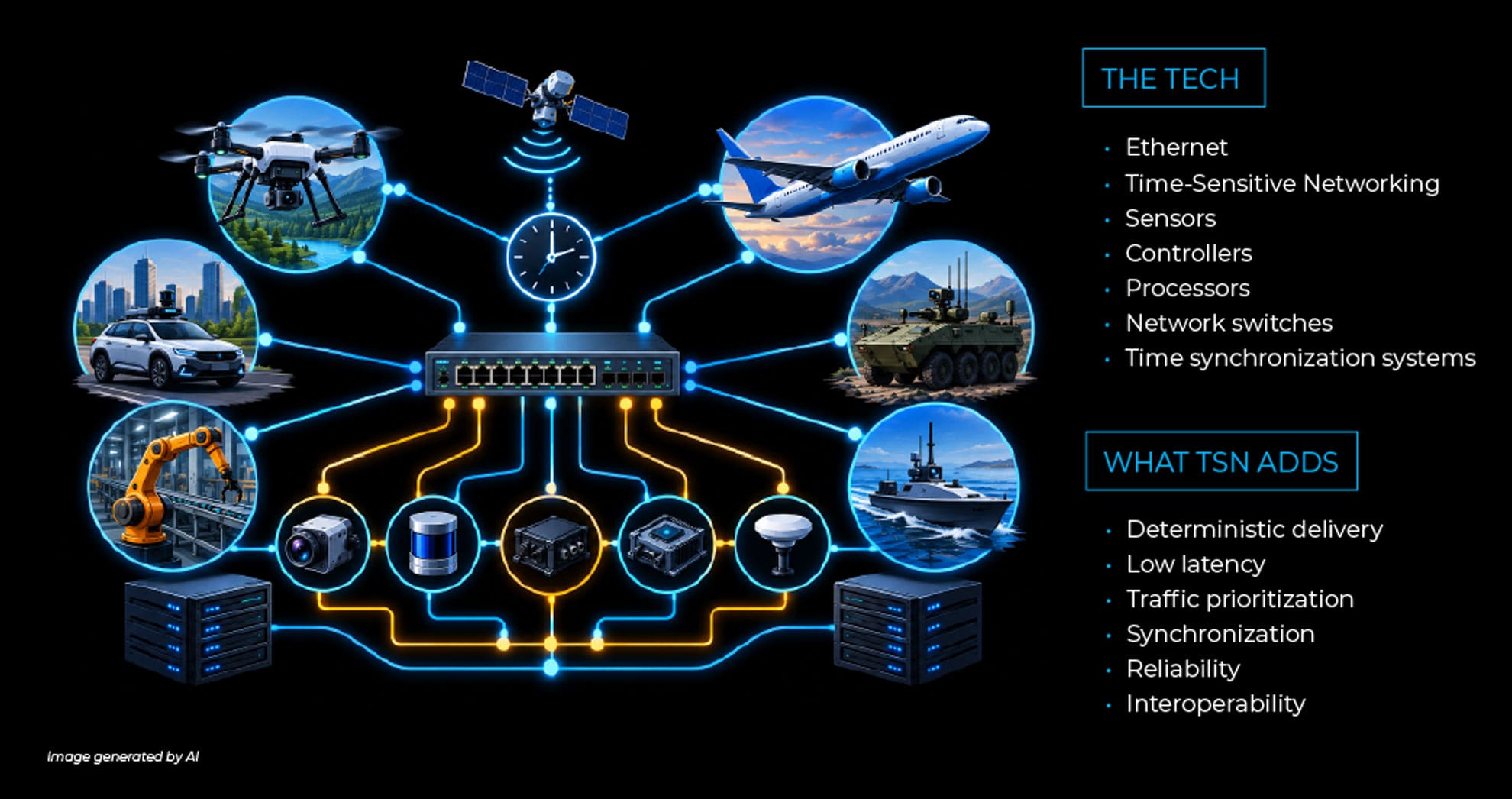
Enabling Autonomous Operations
Autonomous systems require synchronized communications and dependable data delivery to coordinate sensors, processors, controllers, and actuators in real time. IEEE standards provide the networking and timing foundations that help autonomous aerospace systems operate safely and efficiently.
Relevant Standards:
- IEEE 802.1™ TSN
- IEEE 1588™-2019
- IEEE 802.1AS™-2025
- IEEE 802.3™-2022

Creating Interoperability for Uncrewed Aircraft Systems
As drone applications continue to expand, interoperability among payloads, sensors, communications systems, and onboard technologies becomes increasingly important. IEEE standards help establish common interfaces and operational frameworks that support a broader ecosystem of uncrewed aircraft systems.
Relevant Standards:
- IEEE 1937.1™-2020
- IEEE 1937.6™-2026
- IEEE 1937.8™-2024
- IEEE 802.11™

Positioning, Navigation, and Timing Matter
Whether guiding spacecraft, supporting aviation operations, or enabling autonomous vehicles, Positioning, Navigation, and Timing (PNT) technologies provide the critical information needed to determine location, direction, and synchronization. IEEE standards help improve the resilience and reliability of these essential capabilities.
Relevant Standards:
- IEEE P1952™

Advancing Earth Observation and Remote Sensing
Remote sensing technologies offer valuable insights into environmental conditions, infrastructure, agriculture, and climate systems through advanced data collection methods and analysis techniques. IEEE standards support consistency, interoperability, and data quality across a wide range of remote sensing applications.
Relevant Standards:
- IEEE 4001™-2025
- IEEE P4002™
- IEEE 4003™-2021
- IEEE P4005™
- IEEE P4006™

Building a Resilience-Ready Workforce
Technology is only part of the equation. A resilient aerospace future also depends on professionals who understand how to apply cybersecurity, resilience engineering, and standards-based approaches to real-world challenges. IEEE educational programs and workforce initiatives help equip practitioners with the knowledge needed to strengthen the resilience of space systems.
Relevant Standards and Programs:
- IEEE Space Systems Resilience Engineering Program
- IEEE Space Systems Resilience Engineering Pilot Cohort
- IEEE 3536™-2026
Looking Ahead
As aerospace systems become more interconnected, autonomous, and mission-critical, standards play an increasingly important role in helping technologies work together securely and reliably. From cybersecurity and communications to autonomous operations, positioning technologies, and Earth observation, IEEE standards continue to help provide the framework for innovation across air, space, and beyond. View the full infographic to visualize the technology that enables the missions of today’s engineers.
To learn more about standards, standards development, or how to get involved, visit our website standards.ieee.org